

Event Planning
What Happens on Event Day: Behind the Scenes of a Portable Bar Setup
6 October 2026 · 1319 words
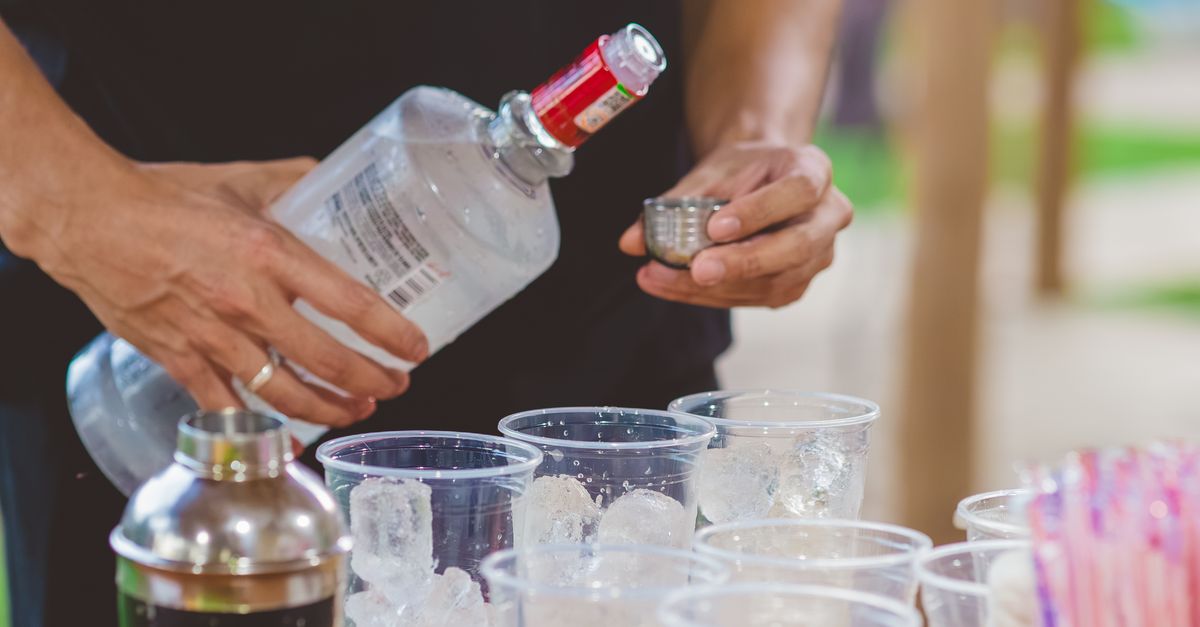
What Happens on Event Day: Behind the Scenes of a Portable Bar Setup
To a guest, a portable bar just appears. One minute it's a bare table, the next there's a bartender, a chilled bar and a menu ready to go. What guests never see is the sequence of steps that gets it there. If you're booking portable bar services for the first time, knowing what happens before the first pour makes it easier to plan around, and easier to see what makes the difference between a bar that opens smoothly and one that scrambles.
Here is how event day actually runs, from the prep nobody sees to the last bottle packed away.
What Guests See vs. What Actually Happens
Guests see the finished product: a well-stocked bar, a short menu, and a bartender who seems to have everything within arm's reach. What sits behind that is a chain of small jobs, each dependent on the one before it. The ice has to be there before the icebox is filled. The table has to be stable before the bottles go on it. The glassware has to be counted before the menu can be confirmed as workable.
None of these jobs is difficult. But each one takes time, and skipping any of them tends to show up in the first ten minutes of service, which is exactly when the bar is under the most pressure.
Before Event Day: The Prep Nobody Sees
Most of the real work happens before we arrive. The menu is confirmed, the shopping list is finalised, and ice is ordered so that it arrives in the window before the event starts. Some of the prep is done at home, so that what we bring to the venue is already partly ready rather than starting from raw ingredients on site.
Hosts have a role here too. The pre-event items on our [bar event checklist](/articles/bar-event-checklist-singapore), such as the menu, ice and icebox, a sturdy table, the shopping list and glassware, are what make the arrival hour run cleanly. When they are handled in advance, setup is a matter of arranging things. When they are not, setup turns into problem-solving.
Arrival: The One-Hour Setup Window
We arrive around one hour before the event starts. That hour is not padding. It covers the logistics of getting equipment and supplies into the venue, and the last-minute touches that make the bar ready for service.
It is also the buffer for the things that sometimes get left until the last minute. Every host is busy on the day of their own event, and it is common for one or two items on the checklist to still be in progress when the bartenders walk in. An hour gives us room to absorb that without it pushing back the start of service.
Building the Bar
Once we are on site, the setup follows a fairly consistent order.
- The table. We need a sturdy, stain-proof surface. Most events can make do with a 1.8m table, and smaller ones with a shorter one, which is why we are fully mobile and do not need a bar structure delivered separately.
- Ice and iceboxes. Ice goes into the iceboxes, one 50L box for a smaller party and two for a bigger one, so that drinks stay properly cold in Singapore's heat.
- Glassware. Glasses are checked for volume and count. A 14oz / 350ml rock glass suits most cocktails, and enough of them need to be on hand for the guest count.
- Ingredients and garnishes. Juices, syrups and garnishes are set out in the order they will be used, so the bartender's hands know where everything is without looking.
- Menu display. A short, clear menu at the front of the bar reduces the number of questions each bartender has to answer during a rush.
Getting the Opening Rush Under Control
The first ten minutes of service are usually the busiest, because guests tend to arrive together and head straight for a drink. For larger events we prepare five to ten portions ready to serve from the start, so the bar is not building every drink from scratch the moment the first guest walks up. It is a small head start that keeps the queue from forming in the first place.
For weddings, some cocktails are premixed without the alcohol, which lets the couple take back any unused spirits at the end of the night. Perishable premixes are always discarded after the event, since they should not be consumed once the night is over.
During Service: Pacing and Accountability
Once service is running, the bartender's job goes beyond making drinks.
- Pacing. A good bar team reads the room and adjusts. That can mean speeding up during an arrival rush, slowing down toward the end of the night, or pausing service altogether during a solemnisation or speech so that every guest's attention is where it should be.
- Accountability. With BYOB, the bottles on the table belong to the host. A staffed bar means every bottle is poured properly and accounted for, rather than left as a self-serve table where bottles can quietly disappear.
- Presentation. Garnishes, glassware and a tidy bar all contribute to how the event looks in guests' photos, and that is worked on throughout service, not only at the start.
Wind-Down: Cleanup and Pack-Down
For a two-bartender team, we start cleaning up about half an hour before the end of service. This is a working wind-down, not a full clean of the venue. A thorough clean would run beyond the agreed hours, so we focus on packing up our own equipment, consolidating leftover ingredients and inventory, and leaving the bar area in good order.
If you would like us to do a full clean-up, we are happy to, but it is chargeable, since it goes beyond the agreed hours. Packing assistance is provided time permitting, so that the host is not left sorting through half-empty bottles at the end of the night.
What This Means for Your Event
The takeaway for hosts is that a smooth bar is mostly decided before service starts. Three things make the biggest difference:
1. Get the checklist items done early, especially ice and the table.
2. Confirm the menu and shopping list well in advance.
3. Give the bar team a clear, uncluttered space to set up in.
For larger guest counts, the structure of the bar matters too, and we cover how to split service across stations in our guide to [structuring a bar for more than 200 guests](/articles/event-bar-service-200-plus-guests).
Frequently Asked Questions
How early do the bartenders arrive?
We arrive around one hour before the event starts. Some prep is done at home beforehand, and the hour covers logistics and last-minute touches.
Do you clean up the venue after the event?
We start a working clean-up about half an hour before the end, for a two-bartender team. It is not a thorough clean, because that would run past the agreed hours. A full clean-up is available as a chargeable extra.
What if the ice hasn't arrived when you get there?
Call the supplier straight away. We recommend ordering ice about three hours before the event and chasing it if it has not arrived an hour beforehand, so there is still time to fix it.
What is the single biggest thing a host can do to help setup go smoothly?
Work through the pre-event checklist early, particularly ice, the icebox and the bar table. Those are the items that are hardest to fix once the bartenders are already on site.
Planning an event and want to see how portable bar services would work for your venue? Get in touch for a custom quote or package recommendation, and we will walk you through the setup for your space.